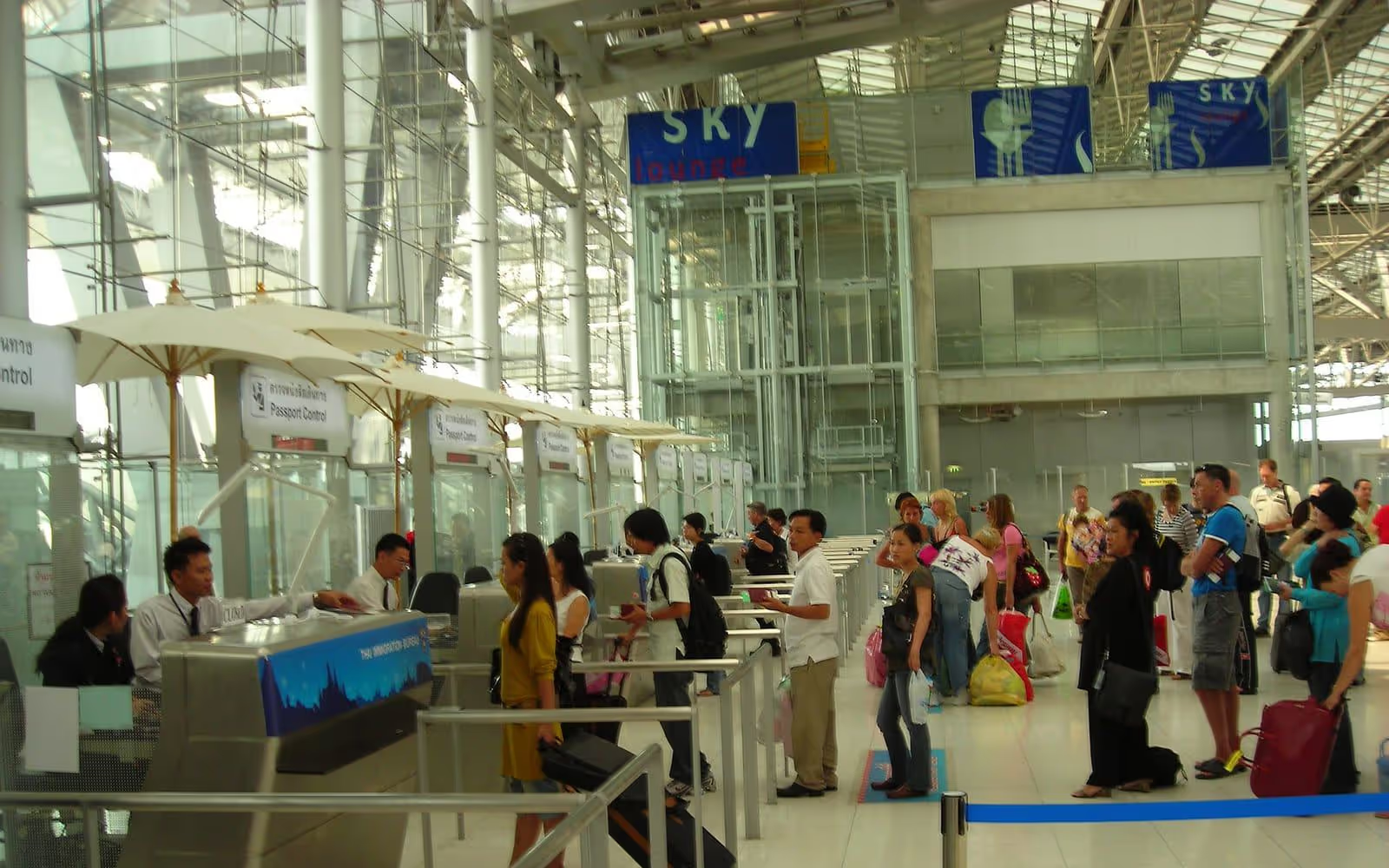
This photograph shows a comparable environment. It is not a photograph of this deployment — Ayonix has not released project photography for publication.
The business problem
Border-gate operations face a specific combination of pressures that few other environments share: high traveller volume, adversarial interest in defeating identity checks, identity records held across more than one system, and an audit requirement that will outlast the officers on duty today.
Manual comparison of a document portrait against the person presenting it is consistent only as long as attention holds. At volume, across shifts, at three in the morning, it does not.
The environment
Border gates within a United Nations border-control project, with more than 20 cameras in scope.
What was deployed
Ayonix Face Recognition was deployed across more than 20 cameras at border gates to strengthen identity verification and passport-control operations. The system enables authorities to detect and match the faces of refugees and regular travellers against authorised databases and watchlists in real time.
The operational workflow
The deployment supports two distinct operations that are frequently conflated and should not be:
- Verification of a traveller against the document they present — a 1:1 comparison whose error rates do not change with the size of any database.
- Search against authorised identity records — a 1:N operation whose error rates rise with gallery size and which requires its own authorisation.
In both, a match is evidence supporting an officer’s decision rather than the decision itself.
The outcome, as far as it can be stated
The published record states that the deployment supports faster identity checks, helps identify potential document or identity mismatches, and improves security while maintaining an efficient flow of people through border-control checkpoints.
No figure is attached to any of those statements here, because none has been released. A throughput improvement or an error rate would be more persuasive and would not be verifiable, which is the trade this site consistently refuses to make.
Why this case is published at all
Because it is one of two deployments Ayonix is authorised to describe publicly, and because describing it accurately — including the parts that cannot be described — is more useful to a buyer evaluating border technology than a longer case study with invented numbers in it.
If you need referenceable detail beyond what is here, ask during procurement. Some of it can be discussed under NDA that cannot be published on a website.
Next step
Discuss a comparable deployment
Bring the environment, the population and the decision the system has to make. The first conversation covers capture geometry, the exception path and how success would be measured — not a product pitch.