Ayonix Face Recognition

In short

Two deployments Ayonix is authorised to publish: a United Nations border-control project across more than 20 cameras, and ITOCHU Techno-Solutions replacing RFID office access cards with Ayonix FaceID. No unnamed customer, invented metric or unapproved deployment appears here.

What is not on this page

No anonymised customer, no invented metric, no testimonial, and no deployment Ayonix is not authorised to describe. Face recognition customers in government and border environments frequently cannot be named, and a vendor that solves that by publishing unverifiable anonymised cases has solved a marketing problem rather than an evidence one. Two cases you can check are worth more than ten you cannot.

Standard

What every case study on this site must carry

Applied to both of the above, and to any that are added. A case study that cannot meet these is not published.

A registered claim

Each case study names the claim in the evidence register that authorises publishing it. No registration, no case study.

A named or approved customer

Named where the customer permits it. Where naming is not authorised, a description only if that description is accurate and approved — never a flattering approximation.

An evidence source

Where the account comes from, linked. Ideally the customer’s own published statement rather than the vendor’s retelling of it.

Stated limitations

What the case does not establish, listed explicitly. Both current case studies carry four or five, and the list is as prominent as the narrative.

Honest imagery

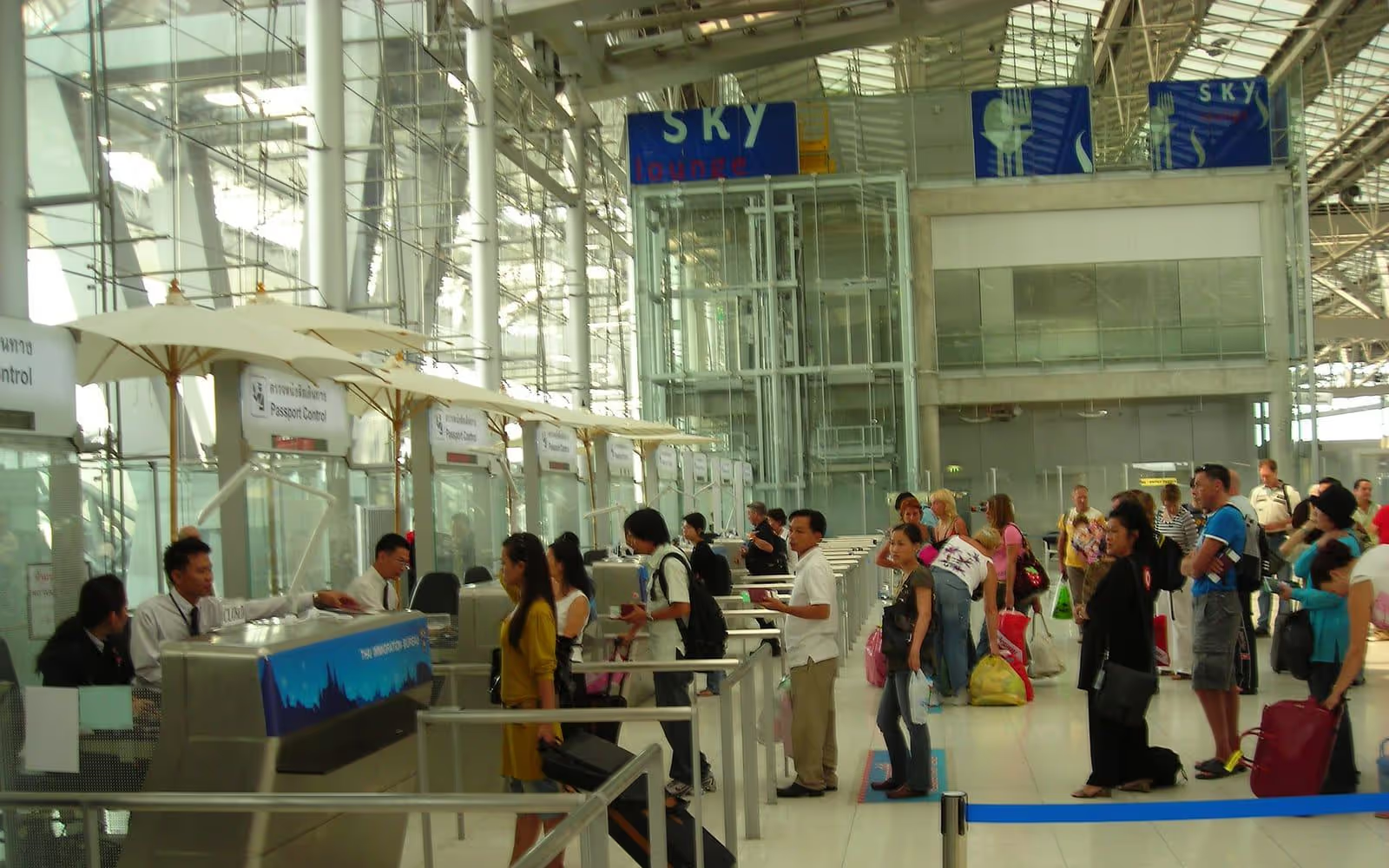
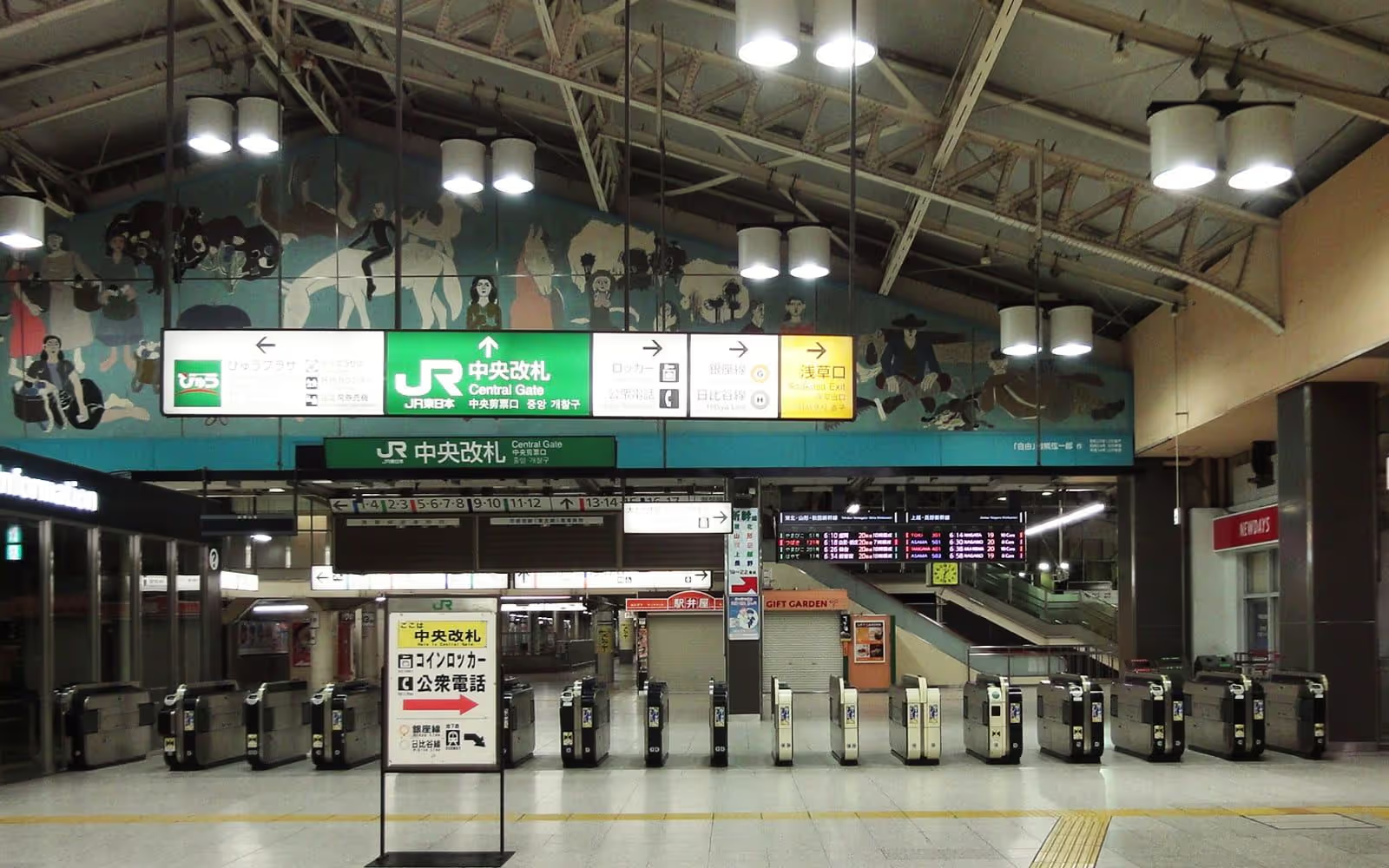
A photograph of the actual deployment where one has been released; otherwise a public-domain or CC0 image with a note saying it is not the site.

No invented numbers

No accuracy figure, throughput improvement, cost saving or testimonial that has not been released for publication. This is the rule that keeps the list short.

Frequently asked questions

Why are there only two case studies?

Because those are the two deployments Ayonix is authorised to publish. Face recognition customers in government, border and enterprise security environments frequently cannot be named, and a vendor that solves this by publishing anonymised case studies full of unverifiable numbers has solved a marketing problem rather than an evidence problem. Two verifiable cases are worth more than ten that cannot be checked.

Why do the case studies contain no performance figures?

Because no figures have been released for publication. An accuracy rate, a throughput improvement or a cost saving would be more persuasive and would not be verifiable by a reader, which is the trade this site consistently refuses. Where such detail exists it can be discussed during procurement, sometimes under NDA.

Are the photographs on these pages from the actual deployments?

No, and each page says so explicitly. They are public-domain or CC0 photographs of comparable environments, registered in the image licence file, and each page states that the image is not of that deployment. Ayonix has not released project photography for publication. Using a photograph while implying it shows a named customer’s site would be a fabrication, so the label is not a formality.

Can Ayonix provide customer references?

That is a procurement conversation rather than a website one, because it depends on what a given customer has agreed to. What can be said publicly is what is on these pages; what can be said under NDA to a serious buyer is more.